 Save
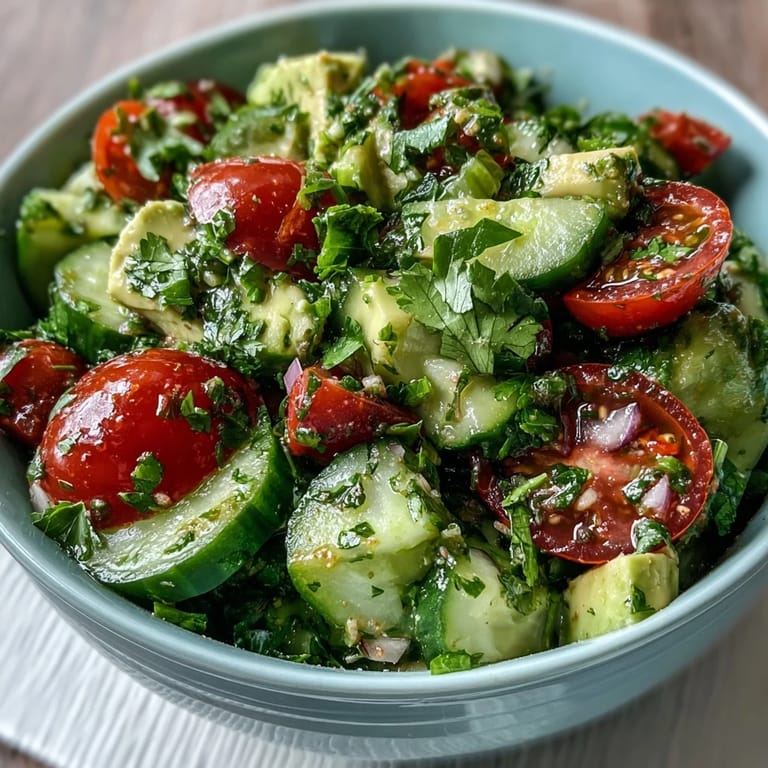
Save There's something about a salad that shows up on a summer afternoon that just feels like exactly what you needed, even if you didn't know it. I discovered this particular combination during one of those weeks when my farmers market haul was overflowing and my kitchen felt too warm for anything requiring heat. The combination of crisp cucumber, bright tomato, and creamy avocado came together almost by accident, but that lemon dressing—sharp and rich at the same time—transformed it into something I've made constantly ever since.
I made this for a group of friends on a patio once, and someone asked if the avocado would get brown if we weren't eating right away, which led to a whole conversation about the timing of salad assembly that I'd never really thought about before. Now I always hold off on adding that dressing until the last possible moment, and it's changed everything about how this salad tastes when people actually sit down to eat it.
Ingredients
- Cucumber, 1 large, diced: The crispness matters here, so choose one that feels firm and heavy for its size, and don't peel it unless you really prefer the skin gone—that's where a lot of the texture lives.
- Cherry tomatoes, 2 cups, halved: These stay juicier than larger tomatoes and they're naturally sweet, which balances the tartness of the lemon without needing extra sugar.
- Ripe avocados, 2, diced: They should yield just slightly to gentle pressure, not be mushy or hard; if they're not quite ready, dice them right before mixing to prevent browning.
- Red onion, 1/4 small, finely sliced: A little goes a long way here—this adds a sharp bite that keeps the salad from tasting flat or one-dimensional.
- Fresh parsley, 2 tbsp, chopped: The fresh herb brings everything together with a subtle earthiness and color that makes this feel alive on the plate.
- Extra-virgin olive oil, 3 tbsp: Use one you actually like tasting, because there's nothing in this dish hiding behind heavy cooking or sauce.
- Freshly squeezed lemon juice, 2 tbsp: Bottled juice tastes tinny in comparison; this dressing really depends on the brightness of real lemon.
- Dijon mustard, 1 tsp: This acts as an emulsifier, helping the oil and lemon juice come together instead of separating.
- Sea salt, 1/2 tsp: Taste as you go here, because the salt brings out the sweetness in the tomatoes and onion.
- Freshly ground black pepper, 1/4 tsp: Freshly ground is non-negotiable; pre-ground pepper has lost its bite by the time it reaches your kitchen.
Tired of Takeout? 🥡
Get 10 meals you can make faster than delivery arrives. Seriously.
One email. No spam. Unsubscribe anytime.
Instructions
- Gather and prep your vegetables:
- Get your cutting board set up and work through each vegetable methodically—there's no rush, and taking your time means you'll notice if something looks off or needs adjusting. The key is having everything ready before you touch the avocado, since it browns quickly once it's cut.
- Combine the vegetables in a large bowl:
- Toss the cucumber, tomatoes, avocado, red onion, and parsley together gently with your hands or a soft spatula, being careful not to squash the avocado pieces. At this point the salad will look bright and fresh and a little bit waiting.
- Make the dressing in a separate bowl:
- Whisk the olive oil, lemon juice, mustard, salt, and pepper together until you see the mixture thicken slightly and turn a bit creamy—that's the emulsion happening. Taste it straight from the whisk; it should make your mouth water a little.
- Dress the salad at the last moment:
- Pour the dressing over everything and use a gentle hand to toss it all together, making sure the vegetables get coated without the avocado getting mashed into smithereens. If you're serving it right away, this is perfect; if you need to wait a bit, keep the dressing separate and add it just before people eat.
- Taste and adjust:
- Take a bite and see if it needs more salt or a squeeze more lemon—salads are forgiving this way, and you're the only one who knows what your palate wants. Season it until it tastes exactly right to you.
 Save
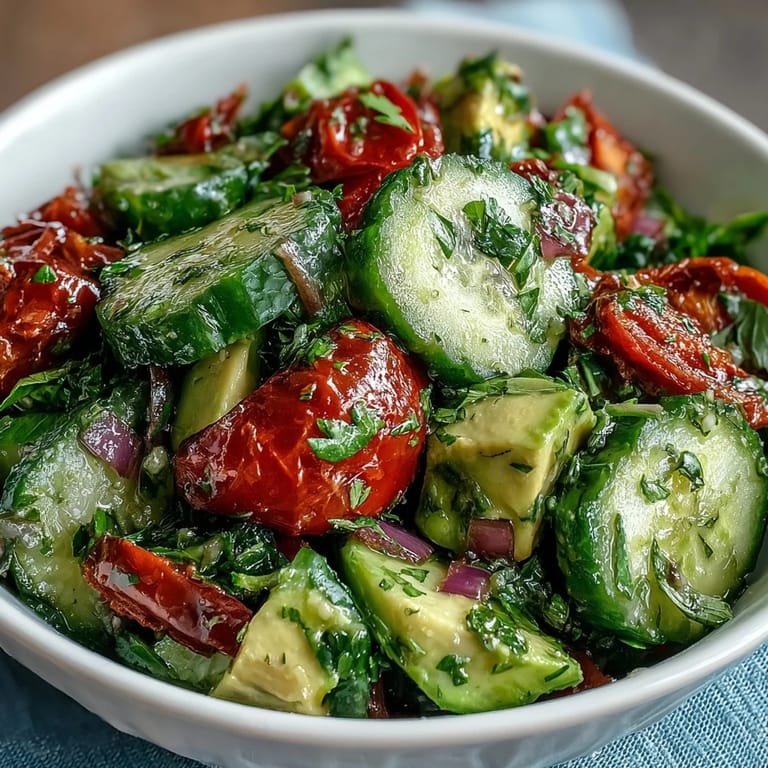
Save Someone once told me that salad was a canvas, and I didn't really understand what they meant until I watched people put their own spin on this one—adding nuts, cheese, different herbs—all while the base stayed simple and let everything shine. That moment made me realize this recipe is less about following instructions perfectly and more about understanding why each ingredient is there so you can trust your own instincts with it.
When Fresh Ingredients Make All the Difference
The quality of your vegetables matters in a way it doesn't always in cooked dishes, where time and heat can compensate for less-than-ideal produce. Here, everything shows—a mealy tomato, a bitter cucumber, an overripe avocado—so it's worth taking a moment at the market to choose vegetables that feel right in your hand. If you can't find good tomatoes, consider using fewer of them and adding something else like fennel or bell pepper instead.
Building Your Dressing Right
That moment when you whisk the oil and lemon juice and it suddenly thickens and turns pale is worth noticing, because it means the emulsion is working. If you add the oil too fast, or if your bowl is cold, or if you skip the mustard, the dressing might separate—it still tastes fine, but it won't coat the vegetables the same way. Taking thirty seconds to whisk it properly pays off in every bite.
Variations That Actually Work
The skeleton of this salad is flexible enough that you can make it your own without losing what makes it work. Crumbled feta brings a salty creaminess, kalamata olives add a briny depth, and fresh basil or cilantro can replace the parsley depending on what you're in the mood for. The one thing I'd keep constant is the lemon dressing—that's the thing holding everything together and making it taste like more than just chopped vegetables.
- If you add cheese or nuts, reduce the salt slightly since they bring their own savory notes to the party.
- Keep any additions at room temperature so they don't cool down the fresh vegetables.
- Taste the salad again after you add anything new, since flavors shift once more ingredients are in the mix.
 Save
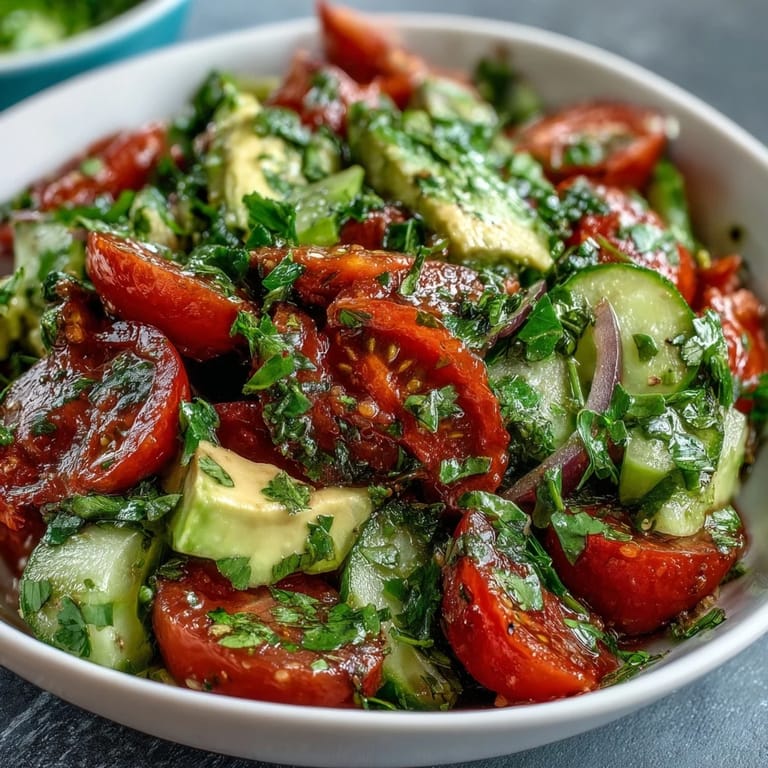
Save This salad shows up on my table more often when the weather turns warm and I remember why simple food, made with attention and good ingredients, needs no apologies. It's the kind of recipe that doesn't impress people with technique, but instead with the way it tastes like someone cared enough to get each piece right.
Recipe FAQs
- → What makes the dressing flavorful?
The lemon juice combined with extra-virgin olive oil and Dijon mustard creates a zesty and creamy dressing that enhances the salad's freshness.
- → Can I prepare this salad ahead of time?
For best texture, add the dressing just before serving to prevent the avocado from browning and maintain crispness.
- → What fresh herbs work well in this salad?
Parsley is recommended for a fresh note, but basil or cilantro can also be used for different flavor profiles.
- → How can I add extra flavor or texture?
Try adding crumbled feta cheese or sliced olives to bring a salty contrast and varied texture.
- → Is this suitable for special diets?
Yes, this salad is vegan, gluten-free, and dairy-free making it suitable for various dietary needs.