 Save
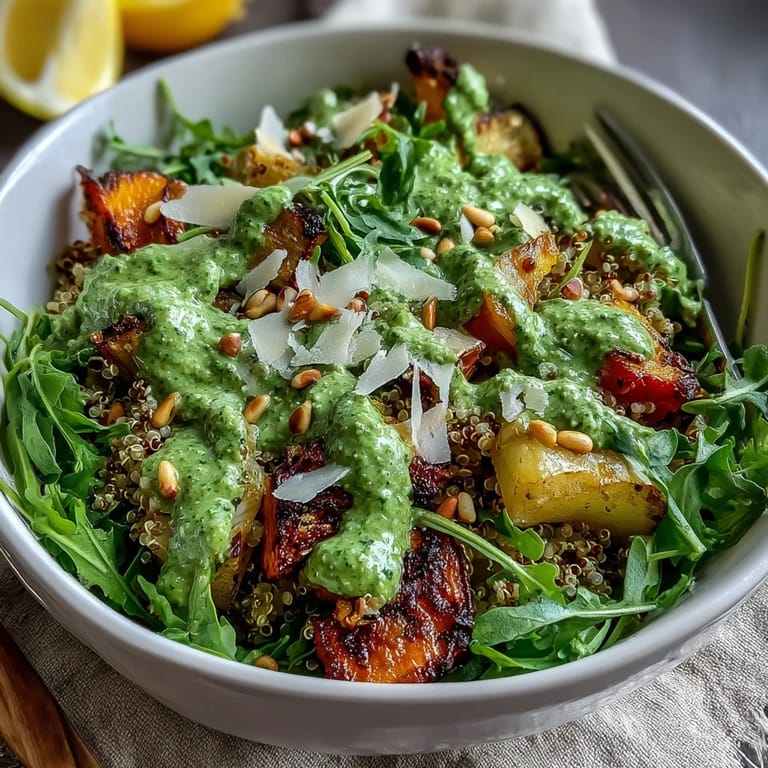
Save One afternoon, while scrolling through farmers market photos on my phone, I noticed how vibrant the arugula looked and thought about making something that celebrated that peppery bite instead of hiding it. This bowl came together almost by accident—I had quinoa simmering, roasted vegetables cooling on a sheet pan, and suddenly wondered what would happen if I turned arugula into a sauce instead of just wilting it into soup. That curiosity led to this: a bowl that tastes bright, feels substantial, and somehow manages to be both simple and impressive.
I made this for my neighbor last spring when she mentioned feeling tired of the same lunch rotation. She came over, and while the vegetables roasted, the kitchen filled with this sweet caramelized smell that made us both stop and just breathe for a second. When we sat down to eat, she took a bite and her whole face changed—she made me text her the recipe before she even finished her bowl.
Ingredients
- Quinoa (1 cup uncooked): Rinse it thoroughly under cold water to remove the bitter coating—this small step makes a noticeable difference in how pleasant it tastes, and it fluffs up beautifully when cooked.
- Cherry tomatoes (1 cup, halved): Halving them exposes more surface area to the heat, which means they caramelize and concentrate their sweetness instead of just softening.
- Zucchini (1 medium, sliced): Cut them about a quarter-inch thick so they get tender but not mushy, and they'll soak up the roasting heat evenly.
- Red bell pepper (1 medium, chopped): This adds sweetness and color that balances the arugula's sharpness without competing with it.
- Fresh arugula for pesto (2 cups, packed): The peppery leaves are non-negotiable here—use the freshest bunch you can find, and pack it down when measuring so you get enough of that grassy bite.
- Walnuts or pine nuts (1/4 cup): Walnuts are earthy and affordable, but pine nuts are buttery and rich if you want to splurge; either way, they provide structure and keep the pesto from turning into thin sauce.
- Garlic (1 clove): One small clove is enough—you want the arugula to stay the star, not be overshadowed by garlic heat.
- Parmesan cheese (1/2 cup grated, plus 1/4 cup shaved for topping): Grating it fresh makes a difference in flavor and helps it blend smoothly into the pesto.
- Olive oil (3/4 cup total): Good oil matters here since it carries flavor; use something you actually like tasting on its own.
- Lemon juice (1 tablespoon): This brightens the pesto and keeps it from feeling heavy, so don't skip it even if it seems like a small amount.
- Fresh arugula for assembly (2 cups): This is your foundation, and leaving it raw keeps the bowl light and prevents everything from turning into warm mush.
Tired of Takeout? 🥡
Get 10 meals you can make faster than delivery arrives. Seriously.
One email. No spam. Unsubscribe anytime.
Instructions
- Start your quinoa first:
- Rinse it under cold water until the water runs clear, then combine with 2 cups water and a pinch of salt in a saucepan. Bring to a boil, then immediately lower the heat, cover, and let it simmer undisturbed for 15 minutes—this gentle timing keeps each grain intact and fluffy.
- Get the vegetables ready for roasting:
- Toss your halved cherry tomatoes, zucchini slices, and bell pepper chunks with a tablespoon of olive oil and black pepper, then spread them out on a baking sheet in a single layer. Pop the baking sheet into a 400°F oven for 18 to 20 minutes, stirring once halfway through if you think of it, until the edges caramelize and everything softens.
- Build your pesto while vegetables roast:
- In a food processor, combine your packed arugula, nuts, garlic clove, and grated Parmesan, then pulse until it looks chunky and loose. With the motor running, slowly drizzle in the olive oil and lemon juice, letting them blend in gradually—this prevents the sauce from becoming too thin or broken.
- Bring it together gently:
- Once your quinoa is fluffy and your vegetables are out of the oven, combine them in a large bowl with about half of your pesto, then toss everything with a light hand so you coat everything without mashing the vegetables or grain.
- Compose your bowls with intention:
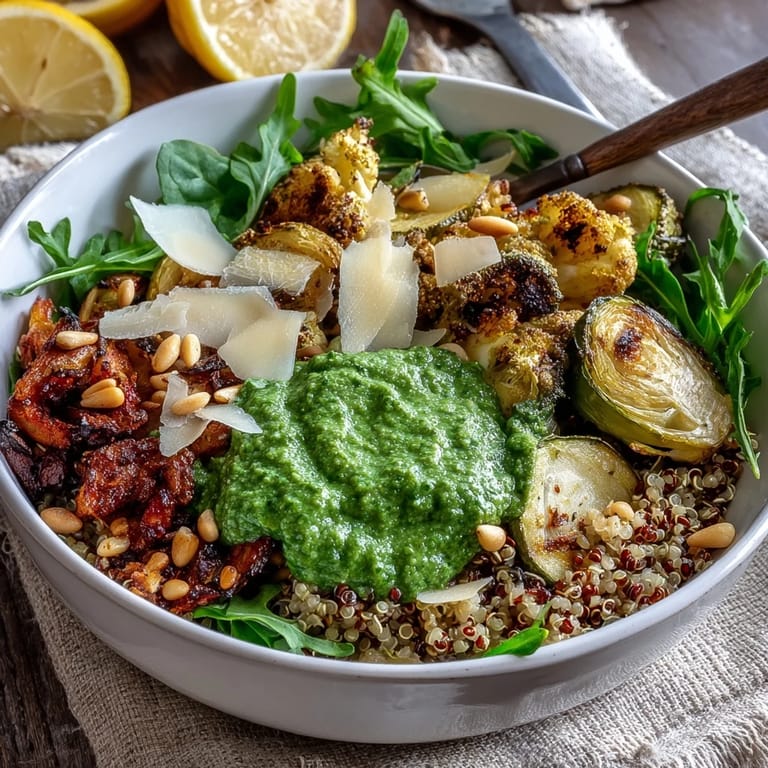
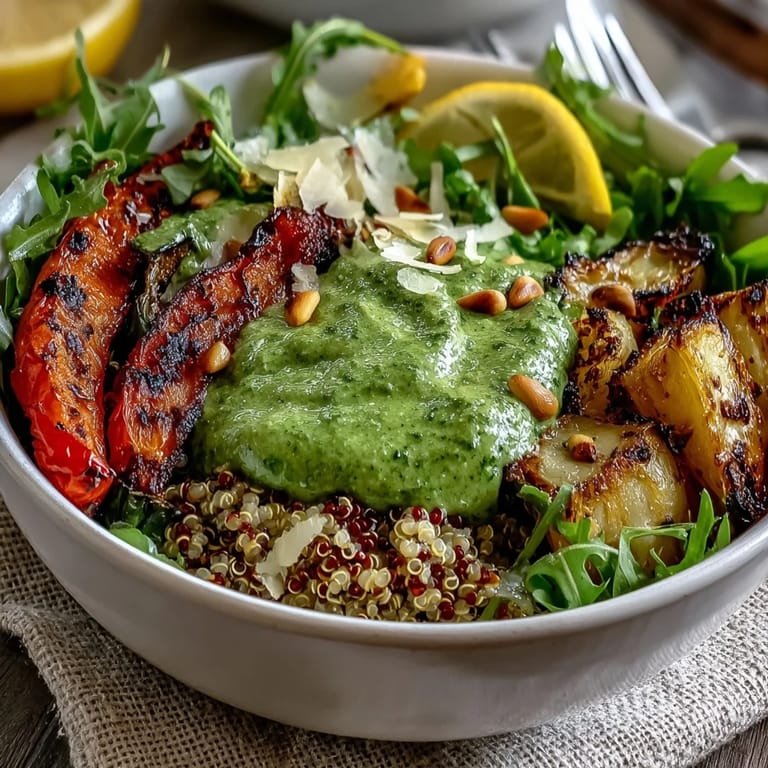
- Divide the fresh raw arugula among four bowls as your base, then top each with the warm quinoa and vegetable mixture. Drizzle the remaining pesto over everything, then scatter shaved Parmesan and any toasted nuts on top, finishing with a few grinds of fresh black pepper.
 Save
Save What surprised me most was how this bowl became something people asked for by name, not just as a one-off dinner. It sits happily in a lunchbox without getting soggy, tastes just as good cold the next day, and somehow manages to feel like you're doing something good for yourself while actually enjoying every bite.
When to Make This Bowl
This feels like a late spring or early summer meal to me, when arugula is plentiful and the last thing you want is a heavy dinner. It's equally at home as a lunch you bring to work, a light dinner on busy weeknights, or something to bring to a potluck where people actually ask what's in it. The bowl format makes it forgiving too—you can prep components ahead and assemble just before eating, which is convenient if you're feeding people with different schedules or preferences.
Making It Your Own
The beauty of this bowl is that it tolerates improvisation well. Swap the grains around depending on what you have—farro has more texture, brown rice is nuttier, and couscous cooks faster when you're in a rush. The roasted vegetables are a suggestion, not law; roasted broccoli is wonderful, as are eggplant, asparagus, or cauliflower if that's what appeals to you on a given day. If you eat protein, grilled chicken, crispy tofu, or roasted chickpeas all nestle into the bowl without fighting for attention.
The Pesto Secret
The pesto is what elevates this from a simple grain bowl to something memorable, so it deserves a moment of attention. The ratio of nuts to arugula matters because the nuts keep everything creamy and prevent it from becoming a thin, broken sauce that just slides off. If you're vegan, nutritional yeast replaces the Parmesan without much fuss, though you might add an extra pinch of salt to compensate for what you've lost in umami. Keep some pesto as a reserve for drizzling at the end—it's the difference between a good bowl and one that makes people pause and really taste what they're eating.
- Make extra pesto and freeze it in ice cube trays for random pasta nights or vegetables that suddenly need excitement.
- Taste the pesto before assembling the bowl and adjust salt or lemon juice if it feels flat—this one moment of checking prevents disappointment.
- If your pesto breaks or looks too thin, don't panic; add a tablespoon more of grated Parmesan and pulse gently until it comes back together.
 Save
Save This bowl reminds me that the best meals don't need to be complicated—they just need ingredients that actually taste like something and the intention to let each one shine. Make this once, and it'll become part of your regular rotation.
Recipe FAQs
- → Can I make the arugula pesto ahead of time?
Yes, prepare the pesto up to 5 days in advance and store it in an airtight container in the refrigerator. The flavors actually develop and meld better after a day or two.
- → What other grains work well in this bowl?
Farro, brown rice, couscous, or even barley make excellent substitutes for quinoa. Adjust cooking times according to package instructions for your chosen grain.
- → How can I make this dish vegan?
Replace the Parmesan cheese with nutritional yeast in both the pesto and garnish. Nutritional yeast provides a similar savory, umami flavor profile while keeping the dish plant-based.
- → Can I add protein to make it more filling?
Absolutely. Grilled chicken breast, crispy tofu, or chickpeas pair beautifully with the arugula pesto. Add your protein of choice during the final toss or serve on top.
- → What vegetables can I substitute for roasting?
Feel free to use eggplant, asparagus, broccoli florets, or sweet potato cubes. Root vegetables like carrots or beets also work wonderfully with the peppery pesto.
- → How do I store leftovers?
Keep components separate in airtight containers for up to 4 days. Store the pesto separately from the grains and vegetables to prevent sogginess. Reheat grains and vegetables gently before assembling.