 Save
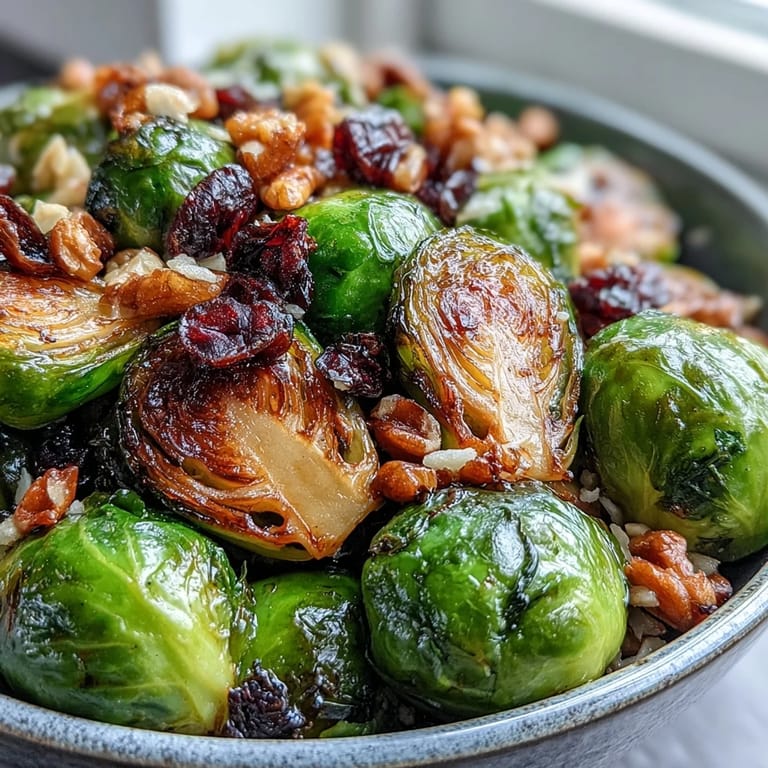
Save My coworker Sarah kept raving about this bowl she'd been making for lunch, and honestly, I was skeptical until she brought some to share. The moment I bit into those caramelized Brussels sprouts—crispy on the edges, almost nutty—I understood the obsession. She'd cracked the code on making vegetables that actually taste like something you'd choose to eat, not something you're supposed to eat. That afternoon, I found myself in the grocery store loading my cart, determined to recreate whatever magic she'd discovered.
I made this for my sister during her first week of trying to eat healthier, and I watched her face light up when she realized this wasn't some sad rabbit food situation. She actually asked if I could teach her how to roast the Brussels sprouts, which felt like a small victory in our lifelong battle over who eats their vegetables. Now it's become our Thursday night ritual when she visits—I roast the vegetables while she handles the dressing, and we catch up over bowls that somehow feel both indulgent and nourishing.
Ingredients
- Brussels sprouts: These are the star, so look for ones that are roughly the same size so they cook evenly; halving them flat-side down creates those gorgeous caramelized faces.
- Red onion: Slicing it thin means it softens into the roasting vegetables instead of staying raw and harsh, adding sweetness when the heat hits.
- Olive oil: Don't skip the coating—it's what transforms the vegetables into crispy-edged beauties rather than steamed sadness.
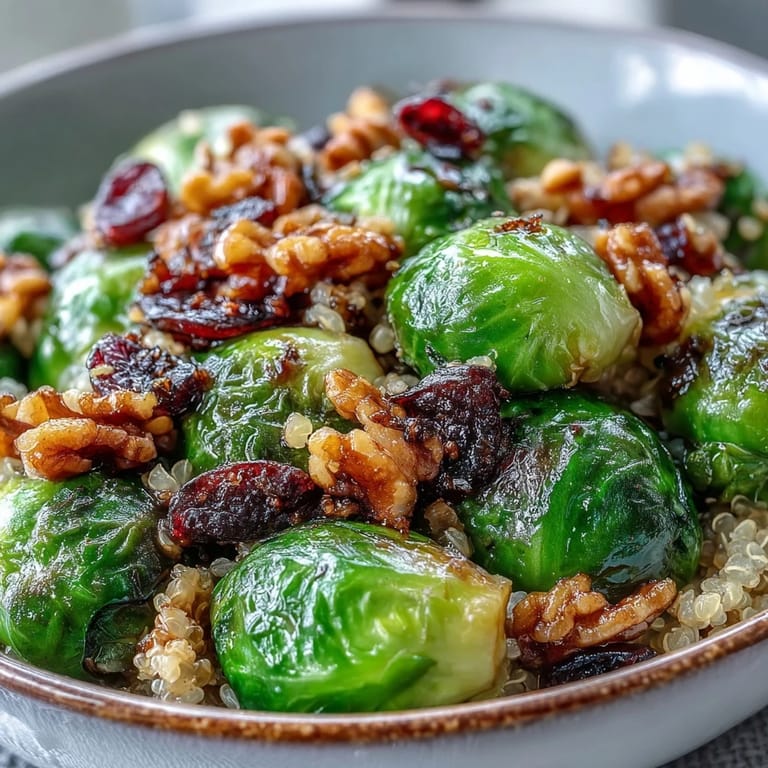
- Quinoa or brown rice: Either works beautifully; quinoa adds a protein boost and nutty flavor, while brown rice is earthier and more forgiving if you're new to cooking grains.
- Balsamic vinegar: This is the dressing backbone—look for one that smells rich and complex, not overly acidic.
- Dijon mustard: A small spoonful emulsifies the dressing and prevents it from separating, plus adds a subtle sophistication.
- Maple syrup or honey: Just enough to balance the acidity and add a whisper of sweetness that makes everything taste more harmonious.
- Walnuts, cranberries, and seeds: These are your texture contrast and final flourish—choose what calls to you from your pantry.
Tired of Takeout? 🥡
Get 10 meals you can make faster than delivery arrives. Seriously.
One email. No spam. Unsubscribe anytime.
Instructions
- Get Your Oven Ready and Prep the Vegetables:
- Preheat to 425°F and line your baking sheet with parchment—this prevents sticking and makes cleanup effortless. Toss the halved Brussels sprouts and sliced red onion in a bowl with olive oil, salt, and pepper, making sure every piece gets a light coating.
- Spread and Roast Until Golden:
- Lay everything out flat on the baking sheet with the Brussels sprouts cut-side down, and pop them in the oven. About fifteen minutes in, give everything a stir so it roasts evenly and caramelizes on multiple sides.
- Cook Your Grains While Vegetables Roast:
- Rinse your quinoa or rice under cold water, then combine with two cups of water or broth in a saucepan. Bring to a boil, cover, reduce heat to low, and simmer for fifteen to twenty minutes until tender and liquid is absorbed.
- Whisk Your Dressing Together:
- In a small bowl, combine the balsamic vinegar, extra-virgin olive oil, maple syrup, Dijon mustard, salt, and pepper—whisk until the oil and vinegar become friends instead of separating. Taste it and adjust if needed; the balsamic should shine but not overwhelm.
- Assemble Your Bowls:
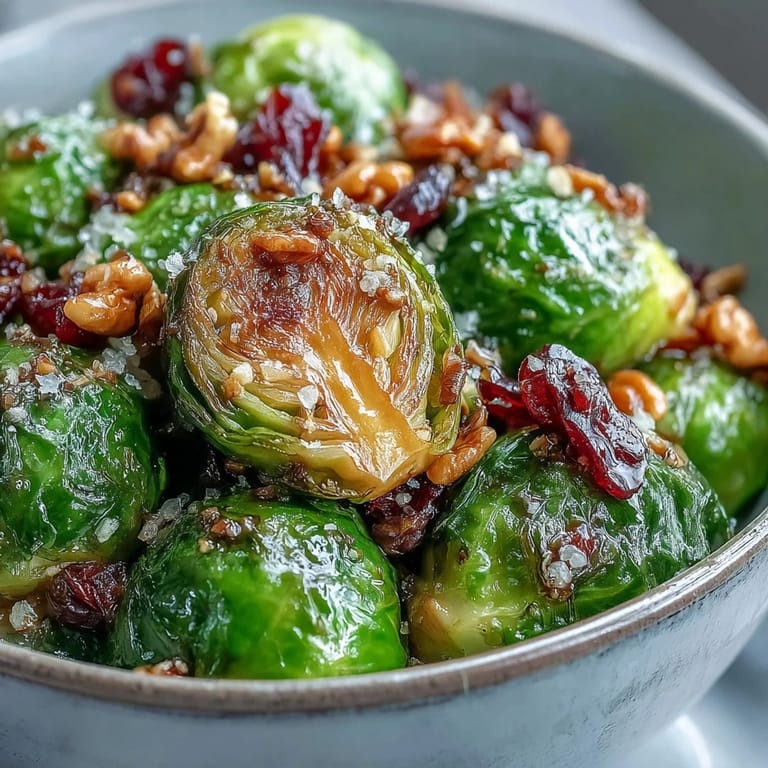
- Divide the fluffy grains among four bowls, create a nest for your roasted vegetables, and pour the dressing generously over everything. Top with nuts, cranberries, and seeds if your pantry permits.
 Save
Save There's something quiet and centering about assembling this bowl—the ritual of it feels like self-care without the pretense. Every time I make it, I'm reminded that nourishing yourself doesn't have to be complicated or joyless; sometimes it's just vegetables roasted until they're irresistible, grains you actually cooked yourself, and a dressing that makes you feel clever for putting it together.
Why This Bowl Became My Go-To
There was this moment during my third time making this when I realized I wasn't following the recipe anymore—I was improvising. I'd add extra garlic to the roasting pan one week, swap in farro the next, experiment with different mustard types. That's when I knew it had stopped being someone else's recipe and become mine. It's flexible enough to work with whatever you have on hand, but intentional enough that it never feels like you're just throwing things together.
The Art of Caramelization
The magic really is in that roasting temperature—425°F is hot enough to create those caramelized edges without drying everything out. Watch your oven; every oven has its quirks, and if yours runs hot, check around the twenty-five minute mark. You're looking for the Brussels sprouts to turn a deep golden brown on the cut sides, almost bronze where they've spent the most time against the pan.
Make It Your Own
This bowl is genuinely a canvas—build it around what you love and what you have available. The roasted vegetables and grain base are the foundation, but everything else can shift with your mood, your pantry, or the season. I've added roasted chickpeas for extra protein when I'm extra hungry, swapped in butternut squash in fall, and gone wild with different vinegar combinations on adventurous weekends. The structure stays the same while the flavors change completely.
- Try roasted sweet potatoes or carrots mixed in with the Brussels sprouts for extra color and natural sweetness.
- Layer in chickpeas, crumbled tofu, or feta cheese when you want more protein to make this a complete meal.
- Experiment with different grains like farro, bulgur, or even regular rice to find what texture speaks to you.
 Save
Save This bowl taught me that eating well doesn't mean deprivation—it means choosing flavors and textures that genuinely excite you. Make it once, then make it yours from there.
Recipe FAQs
- → Can I prepare this bowl ahead of time?
Absolutely. The roasted vegetables and cooked grains keep well in the refrigerator for up to 4 days. Store components separately and assemble when ready to serve. The dressing can also be made in advance and stored in a sealed container.
- → What other grains work well in this bowl?
Farro offers a chewy texture, bulgur cooks quickly, and couscous provides light fluffiness. Each grain brings its own character while complementing the caramelized vegetables and tangy dressing beautifully.
- → How do I get the best caramelization on Brussels sprouts?
Ensure the Brussels sprouts are cut in half with flat sides down. Roast at 425°F without overcrowding the pan, and resist stirring too frequently. Let them develop deep golden color for optimal sweetness and depth.
- → Can I add protein to make it more filling?
Chickpeas, grilled tofu cubes, or crumbled feta cheese all work wonderfully. Pan-seared chickpeas become crispy and add satisfying texture, while feta brings creamy, salty notes that contrast nicely with the balsamic.
- → What vegetables can I add for variety?
Sweet potatoes or carrots roast beautifully alongside the Brussels sprouts, adding natural sweetness and vibrant color. Butternut squash cubes or parsnips also work well, enhancing the bowl's seasonal appeal.
- → Is this bowl gluten-free?
Yes, when made with quinoa or rice. Always verify your grains are certified gluten-free if needed. The dressing naturally contains no gluten, making this a safe and satisfying option for those avoiding wheat.