 Save
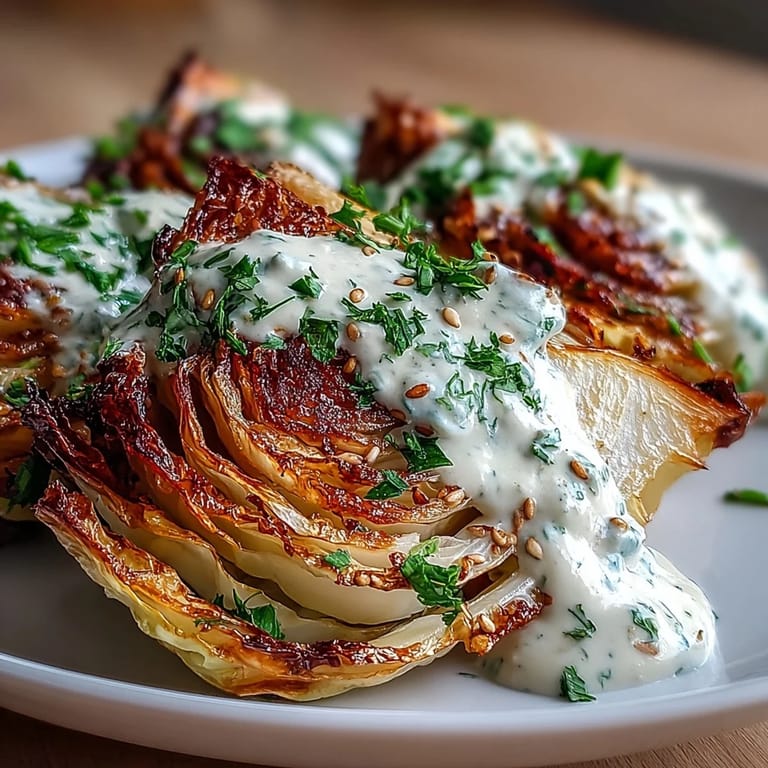
Save I discovered roasted cabbage wedges by accident one winter evening when I was staring into my nearly empty crisper drawer, unwilling to order takeout for the third time that week. A head of green cabbage sat there looking somehow hopeful, and I wondered what would happen if I treated it like I would a head of cauliflower—sliced thick, roasted hard, and dressed boldly. Twenty minutes later, my kitchen smelled like toasted vegetables and possibility, and I realized I'd stumbled onto something that felt both comforting and exciting.
My partner tried this for the first time when I was experimenting with Middle Eastern flavors and needed someone honest to taste while I worked. They sat there quietly for a moment after the first bite, then asked if I could make it again next week. That's when I knew the combination of caramelized cabbage and that creamy, garlicky tahini sauce had crossed over from dinner experiment to something worth repeating.
Ingredients
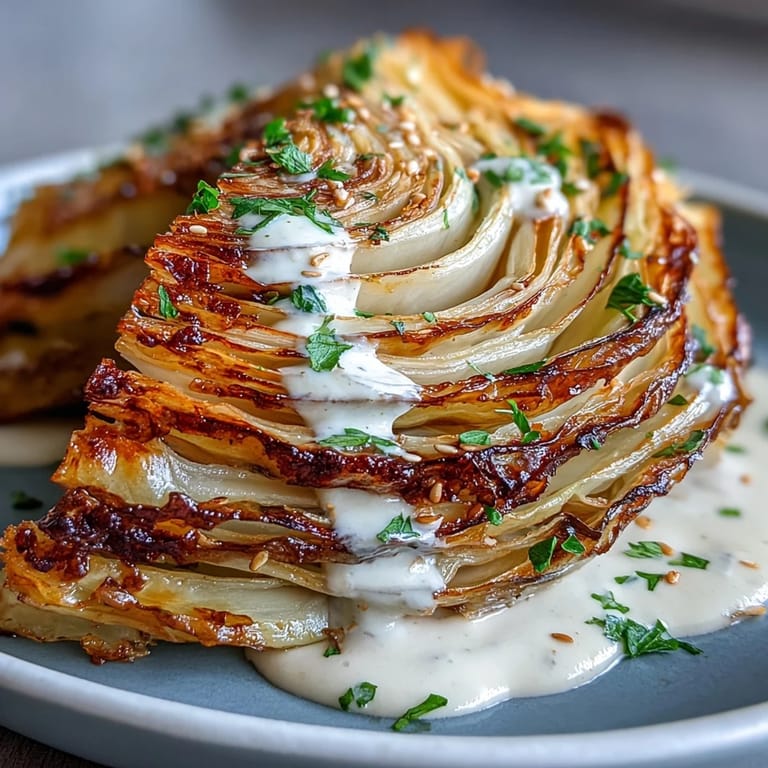
- 1 medium green cabbage (about 2 lbs), cut into 8 wedges, core intact: Keeping the core in place holds each wedge together as it roasts, creating those beautiful layered edges while staying structurally sound enough to pick up and eat with your hands.
- 2 tbsp olive oil: This is your vehicle for browning; don't skimp, and make sure it's generously coating every leaf so the edges can crisp up and caramelize.
- 1/2 tsp kosher salt and 1/4 tsp freshly ground black pepper: Season boldly at the roasting stage because the cabbage will concentrate flavors as it cooks down.
- 1/3 cup tahini (sesame seed paste): Quality tahini makes all the difference—look for brands that are just ground sesame seeds without added oils or fillers, as the sauce will taste more authentic and balanced.
- 1 small garlic clove, finely grated: Grating rather than mincing creates a paste that dissolves into the sauce, delivering garlic flavor without chunks that might surprise you mid-bite.
- 2 tbsp fresh lemon juice: This brightens the tahini's earthiness; use fresh juice, never bottled, because the difference is actually noticeable.
- 2–4 tbsp cold water: Start with less and add gradually because tahini's consistency varies by brand, and you want a sauce that coats the back of a spoon without being pourable like vinaigrette.
- 1/4 tsp ground cumin and 1/4 tsp kosher salt: Cumin anchors the sauce in Middle Eastern territory while the extra salt ensures the flavors read clearly.
- Toasted sesame seeds, fresh herbs, and smoked paprika (optional): These garnishes aren't just pretty—sesame seeds add texture, fresh herbs cut through richness, and paprika brings a whisper of smoke that ties the whole dish together.
Tired of Takeout? 🥡
Get 10 meals you can make faster than delivery arrives. Seriously.
One email. No spam. Unsubscribe anytime.
Instructions
- Get your oven ready and set the stage:
- Preheat to 425°F and line your baking sheet with parchment paper so cleanup is effortless and nothing sticks. A hot oven is essential for browning those cabbage edges into something caramelized and crisp.
- Arrange and oil your cabbage:
- Place wedges on the sheet with a flat side down, then drizzle generously with olive oil and season with salt and pepper on both sides. Don't be shy—you want every exposed leaf to glisten so it can brown properly.
- Let the cabbage do the work:
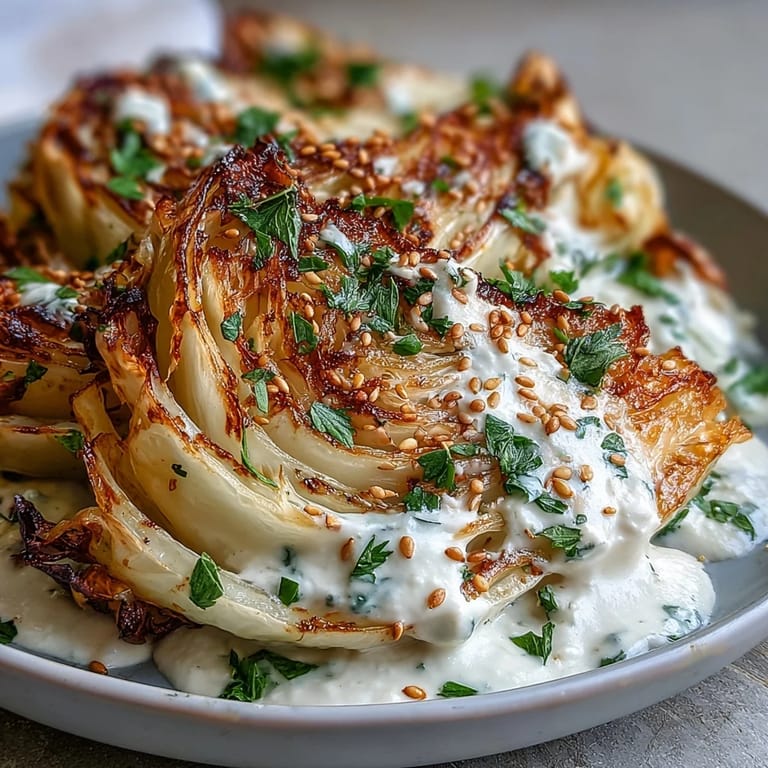
- Roast for 25–30 minutes, flipping halfway through so both sides get that gorgeous golden-brown treatment. You'll know it's ready when the edges are crispy and darkened, and a fork slides through the thickest part easily.
- Make the tahini sauce while everything roasts:
- Whisk tahini, grated garlic, lemon juice, cumin, and salt together in a bowl, then slowly add cold water, one tablespoon at a time, stirring constantly. The sauce will go from thick and stubborn to creamy and pourable as you work—it's almost magical to watch it transform.
- Bring it all together:
- Transfer the roasted cabbage to your serving platter and drizzle generously with tahini sauce. The warmth of the cabbage helps the sauce settle into all the crevices and gaps between the leaves.
- Finish with flourish:
- Sprinkle with toasted sesame seeds, chopped fresh herbs, and a tiny pinch of smoked paprika or Aleppo pepper if you have it. Serve warm or at room temperature—both temperatures are equally good, depending on your mood.
 Save
Save There's a moment during the second roasting phase when the kitchen fills with this toasted, almost nutty smell, and you know something good is happening in the oven. My friend texted me a photo once of this dish surrounded by friends at a casual dinner, and she wrote, 'They're asking for the recipe'—and that's when food stops being just dinner and becomes the reason people gather.
The Magic of Roasted Cruciferous Vegetables
Roasting cabbage is a revelation if you've only ever eaten it raw or steamed. The dry heat of the oven caramelizes the natural sugars in the leaves, creating a sweetness and depth that raw cabbage simply can't offer. I used to think cabbage was a supporting player, something to shred into slaws or add to soups, but this preparation elevated it to star status in ways I didn't expect.
Building Flavor with Tahini
Tahini is one of those ingredients that seems intimidating until you understand what it wants. It's thick, dense, and assertive on its own, but thin it with lemon juice and water, season it boldly, and suddenly it becomes this silky, sophisticated sauce that makes everything taste intentional. I learned this by trial and error, including one failed attempt where I forgot the salt entirely and the sauce tasted flat and incomplete.
Serving and Stretching This Dish
This dish is genuinely flexible, which is one of the reasons it's become a regular rotation in my kitchen. On its own, it's a light dinner or a vegetable-forward side; paired with rice or quinoa, it becomes a more substantial meal; served at room temperature alongside pita bread and hummus, it transforms into a casual mezze moment. The beauty is that roasted cabbage and tahini sauce don't demand anything else, but they also welcome additions without complaint.
- For extra protein, nestle a dollop of hummus or a fried egg on top just before serving.
- Pomegranate seeds scattered over the tahini sauce add brightness and a subtle tart contrast that feels seasonal and celebratory.
- If you're cooking for someone who loves heat, pass around a small bowl of chili flakes on the side so they can customize their spice level.
 Save
Save This recipe taught me that sometimes the most satisfying meals come from working with what's already in your kitchen and treating ordinary ingredients with a little respect and attention. It's become one of my go-to dishes when I want to feel like I've cooked something intentional without spending hours in the kitchen.
Recipe FAQs
- → How do I get the cabbage wedges properly tender?
Roast at 425°F for 25–30 minutes, flipping halfway through. The high heat caramelizes the edges while the core holds the wedges together. You'll know they're done when the edges are deeply browned and crispy while the centers feel tender when pierced with a fork.
- → Can I make the tahini sauce ahead of time?
Absolutely. The sauce keeps well in the refrigerator for up to a week. It may thicken when cold—simply whisk in a little more cold water to reach your desired consistency again. The flavors actually meld and improve after a day.
- → What can I serve alongside these cabbage wedges?
They pair beautifully with grilled meats, roasted chicken, or as part of a mezze spread. For a complete vegetarian meal, serve with warm pita, rice, or quinoa to soak up the extra sauce. They also complement other roasted vegetables like carrots or cauliflower.
- → Why does my tahini sauce sometimes seize or get thick?
This is normal tahini behavior. When you first add lemon juice, the mixture may stiffen dramatically. Keep whisking and gradually add cold water—this loosens the emulsion into a smooth, pourable sauce. Add water one tablespoon at a time until you reach the perfect consistency.
- → Can I use red cabbage instead of green?
Yes, red cabbage works wonderfully and adds vibrant color. Keep in mind it may take slightly longer to cook through. The result is equally delicious, with a slightly earthier sweetness that pairs perfectly with the nutty tahini.
- → How do I prevent the wedges from falling apart?
The key is leaving the core intact when cutting. Slice the cabbage head through the center, then cut each half into wedges while keeping that triangular core piece attached to each wedge. This holds the layers together during roasting and flipping.