 Save
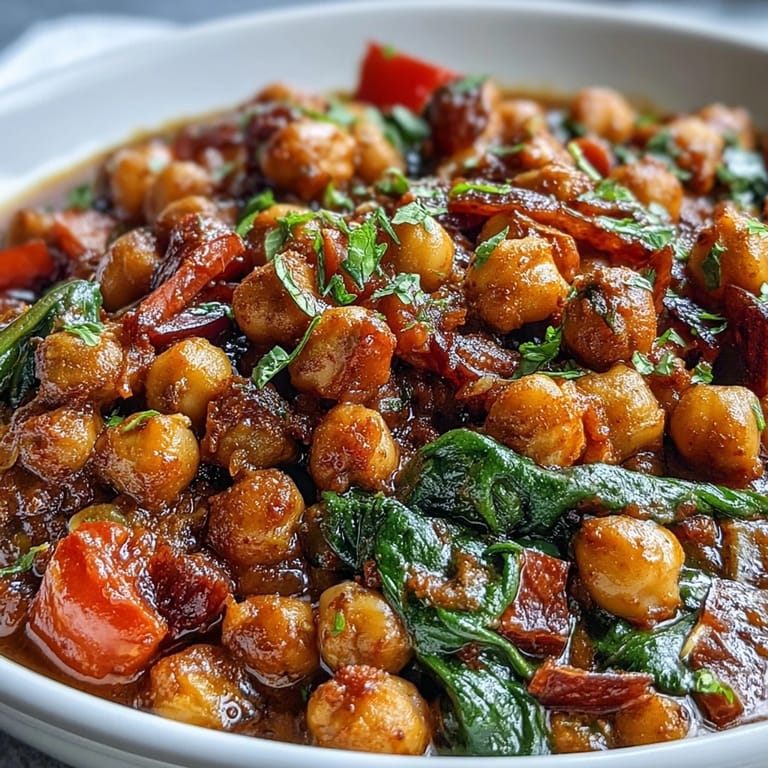
Save There's something about the smell of cumin hitting hot oil that stops me mid-afternoon. I was having one of those days where everything felt scattered until I opened my spice cabinet, and suddenly the kitchen became the only place that made sense. This spicy chickpea stew came together almost by accident—I had vegetables that needed using and an urge to cook something warm and grounding. What started as necessity turned into the kind of meal I now make whenever I need to feel centered again.
I made this for my sister after she'd been going through a rough patch, and she sat at my counter while it simmered, just talking and breathing in the steam. By the time we ladled it into bowls, she'd already smiled twice—once at the color, once when she tasted it. Food doesn't always fix things, but sometimes it makes the moment feel a little less heavy.
Ingredients
- Olive oil: Use your better oil here—it's a small amount that makes a real difference in how the spices bloom.
- Onion, garlic, carrots, bell pepper, zucchini: These are your foundation; don't skip the mincing and dicing step, as it helps everything cook at the same pace.
- Chickpeas: Canned and rinsed is perfectly fine—they're already cooked and tender, which saves time without sacrificing texture.
- Cumin, coriander, smoked paprika, turmeric, chili flakes: Toast these for a moment in the pan before adding liquid so their flavors wake up and marry together.
- Sea salt and black pepper: Season as you go, not all at once; it gives you control and lets you taste the layers developing.
- Diced tomatoes and vegetable broth: The acidic tomatoes balance the earthiness of the spices, while broth adds depth without overpowering.
- Spinach or kale: Add it at the very end so it stays bright and doesn't turn to mush.
- Lemon juice: This is your secret weapon—it lifts everything and adds a brightness that makes people ask for the recipe.
- Fresh cilantro or parsley: Don't skip the garnish; it's the final note that makes the dish feel intentional and alive.
Tired of Takeout? 🥡
Get 10 meals you can make faster than delivery arrives. Seriously.
One email. No spam. Unsubscribe anytime.
Instructions
- Warm your oil and soften the onion:
- Heat olive oil in your pot over medium heat until it shimmers slightly. Add the diced onion and let it cook for 3 to 4 minutes, stirring occasionally, until the edges turn translucent and it softens—this is when the kitchen starts to smell like something real is happening.
- Build your base vegetables:
- Add the minced garlic, diced carrots, bell pepper, and zucchini. Stir everything together and let it cook for about 5 minutes, stirring now and then—you're not looking for color here, just for the vegetables to begin releasing their moisture and flavors into the pot.
- Bloom your spices:
- Sprinkle in the cumin, coriander, smoked paprika, turmeric, chili flakes, black pepper, and salt. Stir constantly for about 1 minute—you'll feel the shift in the pot as the spices become fragrant and coat the vegetables in warm, toasty flavor.
- Add your main ingredients and simmer:
- Pour in the rinsed chickpeas, canned tomatoes, and vegetable broth. Bring the pot to a boil, watching for the surface to break with bubbles, then turn down the heat and let it simmer gently, uncovered, for 20 to 25 minutes. Stir occasionally and taste as it cooks—the longer it simmers, the deeper the flavors become.
- Finish with greens and brightness:
- Add your chopped spinach or kale and cook for 2 to 3 minutes just until it wilts into the stew. Then squeeze in the lemon juice and taste—adjust the salt, heat, or lemon to match your preference.
- Serve with intention:
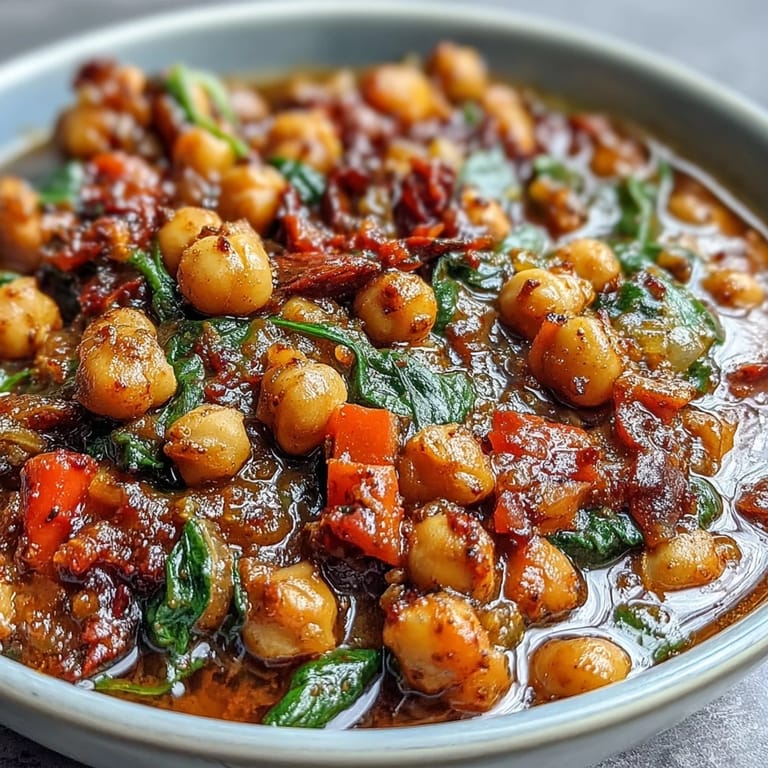
- Ladle the stew into bowls while it's hot and finish with a scatter of fresh cilantro or parsley. The garnish isn't just decoration; it adds a fresh, herbaceous note that makes each spoonful feel complete.
 Save
Save This stew reminds me that sometimes the most nourishing meals aren't the complicated ones—they're the ones made with intention and eaten slowly, preferably with someone you care about. It's the kind of dish that fills you in ways that go beyond hunger.
How to Make It Your Own
The beauty of this stew is that it's flexible enough to welcome your preferences without losing its soul. I've added roasted sweet potato when I had one on hand, and the starch made it even more satisfying. Someone once told me they threw in a can of coconut milk to make it creamier, and now I do that sometimes when I want it to feel indulgent. If you're cooking for someone who loves heat, bump up the chili flakes without guilt; if you're uncertain, start small and taste as you go.
Storing and Reheating
This stew keeps beautifully in the fridge for up to 4 days and actually develops more flavor as it sits. I like to reheat it gently on the stovetop with a splash of water or broth to loosen it back up, though the microwave works fine if you're in a hurry. It also freezes well for up to 3 months, which means you can make a double batch and have comfort food waiting for a future moment when you need it.
What to Serve It With
This stew is hearty enough to stand on its own, but I often pair it with something that soaks up the broth—a bowl of fluffy brown rice, creamy quinoa, or thick slices of toasted bread work wonderfully. The stew's spiced warmth also plays nicely with a crisp salad on the side if you want something fresh and cool to balance the heat. Some mornings I've even spooned leftovers over toast with a fried egg on top, and it transformed into something completely different.
- Brown rice or quinoa catches the broth and turns the meal into something substantial.
- A squeeze of extra lemon on the side lets people adjust the brightness to their taste.
- Crusty bread becomes a tool for pushing stew onto your spoon and soaking up every last drop.
 Save
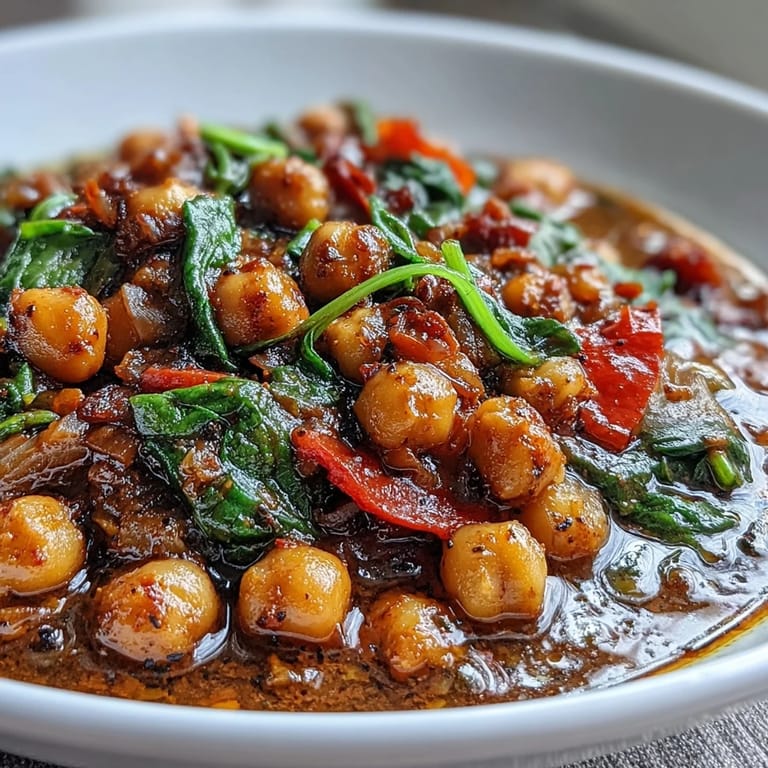
Save This stew has become my quiet ritual, the meal I make when I want to slow down and remember that good food doesn't require fancy techniques or impossible ingredients. Every time I make it, it tastes like coming home.
Recipe FAQs
- → Can I make this stew ahead of time?
Yes, the flavors deepen and improve after sitting in the refrigerator for 1-2 days. Store in an airtight container and reheat gently on the stovetet, adding a splash of broth or water if needed.
- → What can I serve with spicy chickpea stew?
Crusty bread, brown rice, or quinoa make excellent accompaniments. The stew also pairs beautifully with roasted potatoes or a simple green salad with lemon vinaigrette.
- → How do I adjust the spice level?
Start with half the recommended chili flakes, then taste and add more gradually. For a milder version, omit the flakes entirely and rely on the smoked paprika for gentle warmth.
- → Can I freeze this stew?
Absolutely. Cool completely, then transfer to freezer-safe containers for up to 3 months. Thaw overnight in the refrigerator before reheating. The texture remains excellent after freezing.
- → What vegetables work best in this stew?
The suggested carrots, bell pepper, and zucchini create a balanced sweetness and texture. You can also add sweet potato cubes, eggplant, or butternut squash for heartier variations.
- → Is this stew gluten-free?
Yes, all ingredients are naturally gluten-free. Just ensure your vegetable broth is certified gluten-free if you have severe sensitivities, as some brands contain barley-based flavorings.