 Save
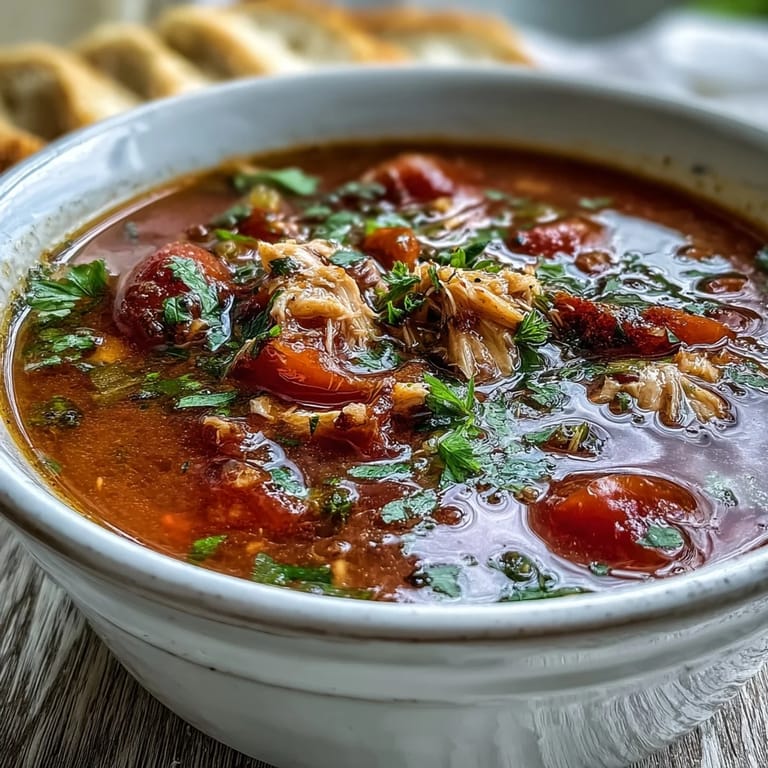
Save There's something almost magical about how quickly this soup comes together—one afternoon, my neighbor stopped by just as I was chopping vegetables, and within twenty minutes we were sitting down with steaming bowls of the most vibrant tomato broth studded with tender tuna. She asked what I was making, and I realized I'd never really given it a name, just always called it my Thursday night soup. It's become the recipe I turn to when I want something that tastes like it took hours but demands barely half an hour of my attention.
My uncle made something similar years ago in his small kitchen in Naples, though he'd never written it down, and when I tried to recreate it from memory, I kept adding too much—more garlic, more herbs, more everything. This version is what finally clicked when I stopped overthinking it and let the tomatoes and tuna speak for themselves, which somehow felt like the lesson he was trying to teach me all along.
Ingredients
- Tuna in olive oil (1 can, 5 oz): Buy the good stuff if you can—the oil it comes packed in is liquid gold for your soup, so don't drain it into the sink like I did the first time.
- Onion, carrot, and celery (1 medium onion, 1 medium carrot, 1 celery stalk): This trio is your aromatic foundation, and taking the time to dice them evenly means they'll soften together rather than some pieces turning to mush.
- Garlic (2 cloves, minced): Fresh garlic makes all the difference here—the instant it hits the hot oil, your kitchen smells like someone who knows what they're doing.
- Canned diced tomatoes (1 can, 14 oz): San Marzano varieties will give you the sweetest, most rounded flavor, but honestly any good quality canned tomato works beautifully.
- Vegetable broth (2 cups): The broth is your canvas, so use one you'd actually taste on its own, not something aggressively salty that overpowers everything else.
- Tomato paste (1 tbsp): This concentrated flavor deepens everything without making the soup taste like ketchup, which is the fine line I learned to walk.
- Dried oregano and basil (1 tsp each): Dried herbs work perfectly here because the simmering time lets them bloom and release their oils into the broth.
- Red pepper flakes (1/4 tsp, optional): Add these only if you like a gentle warmth that builds at the back of your throat, not a shock.
- Olive oil (2 tbsp): Use your everyday olive oil here, not the expensive one you're saving for drizzling—heat mellows its nuances anyway.
- Salt and black pepper: Taste as you go because canned tomatoes and broth can be unpredictably salty, and you want the final seasoning to be yours, not theirs.
Tired of Takeout? 🥡
Get 10 meals you can make faster than delivery arrives. Seriously.
One email. No spam. Unsubscribe anytime.
Instructions
- Sauté your soffritto base:
- Pour the olive oil into a large saucepan and let it heat until it shimmers slightly, then add your onion, carrot, and celery all at once so they cook evenly over medium heat. After about five minutes, they'll become tender and fragrant, and the onion will turn translucent at the edges—this is when you know you're ready to move forward.
- Wake up the garlic:
- Add your minced garlic and let it cook for just one minute, stirring constantly, because garlic burns faster than you'd think and bitter garlic is worse than no garlic at all. You're looking for that sweet, almost almond-like smell that fills the kitchen.
- Build flavor with tomato paste:
- Stir in the tomato paste and cook it for a minute, letting it coat the vegetables and slightly caramelize—this small step concentrates the tomato flavor into something deeper and more complex.
- Add your liquid and seasonings:
- Pour in the canned tomatoes with their juice and the vegetable broth, then sprinkle in the oregano, basil, and red pepper flakes if you're using them. Stir everything together and you'll see the soup transform from scattered ingredients into something that actually looks like itself.
- Simmer and soften:
- Bring the soup to a gentle boil, then lower the heat and let it simmer quietly for eight to ten minutes—you want small, lazy bubbles, not an aggressive rolling boil that breaks down the tomatoes into mush. The vegetables will become completely tender, and the flavors will knit together.
- Fold in the tuna:
- Break apart the canned tuna with a fork so you have flakes rather than chunks, then add it to the soup and simmer for just two to three more minutes to warm it through. Overcooked tuna becomes mealy, so resist the urge to let it linger.
- Taste and adjust:
- Taste a spoonful and see what it needs—usually just a pinch of salt and a grind of black pepper, but this is your moment to make it yours. If it tastes a bit flat, a squeeze of lemon juice works wonders, though you don't have to add it if you don't want to.
- Serve with care:
- Ladle the soup into bowls, scatter fresh parsley or basil over the top if you have it, and serve with crusty bread on the side for soaking up every last bit of broth.
 Save
Save Last winter, I made this soup on a day when everything outside was gray and bitter, and my daughter came home from school with a friend who'd never had anything quite like it before. They sat at the kitchen counter with their bowls, and watching them gradually relax as the warmth sank in, I understood that the best part of cooking isn't the recipe itself—it's the moment when food stops being ingredients and becomes comfort.
When to Add Extra Richness
Sometimes I'll stir in a spoonful of capers right before serving, letting their briny bite cut through the tomato's sweetness, or I'll add a small squeeze of fresh lemon juice that brightens everything without making it taste citrusy. On evenings when I want something more substantial, I'll cook small pasta shapes separately and add them to individual bowls rather than stirring them into the whole pot, which keeps them from absorbing too much broth and getting waterlogged.
Variations That Work
If you find yourself without vegetable broth, chicken broth is a straightforward substitute that adds a subtle richness without changing the character of the dish. Some versions call for fresh tomatoes when they're in season, which means you'd peel and seed them, then add them later in the cooking to keep their freshness intact, though canned tomatoes work just as well and require far less effort.
The Little Things That Matter
The quality of your broth genuinely affects how the whole soup tastes, so if you have a homemade broth sitting in your freezer, this is the recipe that deserves it. The final garnish of fresh herbs isn't just pretty—it adds a brightness that canned ingredients alone can't achieve, so don't skip it if you have parsley or basil on hand.
- Keep your soup at a gentle simmer rather than a hard boil, which helps the flavors meld instead of scattering.
- Taste before serving because different broths and tomato brands have different salt levels, and you want the seasoning to be balanced for your palate, not someone else's.
- Crusty bread for soaking is optional but worth making happen, because that last spoonful of broth scraped up with bread is where the real satisfaction lives.
 Save
Save This soup has quietly become the thing I make when I want to feel capable in the kitchen without stress, and somehow it always tastes better than it should. It's proof that simple ingredients treated with a little patience and attention can become something genuinely memorable.
Recipe FAQs
- → Can I use fresh tuna instead of canned?
Yes, you can use fresh tuna. Cut it into bite-sized pieces and add it in the last 5 minutes of cooking to prevent overcooking. Fresh tuna will give a firmer texture and fresher taste.
- → How can I make this soup heartier?
Add small pasta shapes like ditalini or orzo during the simmering stage, cooking according to package directions. You can also include white beans, chickpeas, or diced potatoes for extra substance.
- → What can I substitute for vegetable broth?
Chicken broth or fish stock work well as substitutes. For a lighter option, use water with an extra tablespoon of tomato paste to maintain flavor depth.
- → How long can I store leftover soup?
Store in an airtight container in the refrigerator for up to 3 days. Reheat gently on the stovetop, adding a splash of broth if needed to adjust consistency.
- → Can I freeze this soup?
Yes, this soup freezes well for up to 3 months. Cool completely before transferring to freezer-safe containers. Thaw overnight in the refrigerator and reheat on the stovetop.
- → What other herbs pair well with this dish?
Fresh thyme, rosemary, or bay leaves work beautifully. Add dried herbs at the beginning with oregano and basil, or stir in fresh herbs just before serving for bright flavor.