 Save
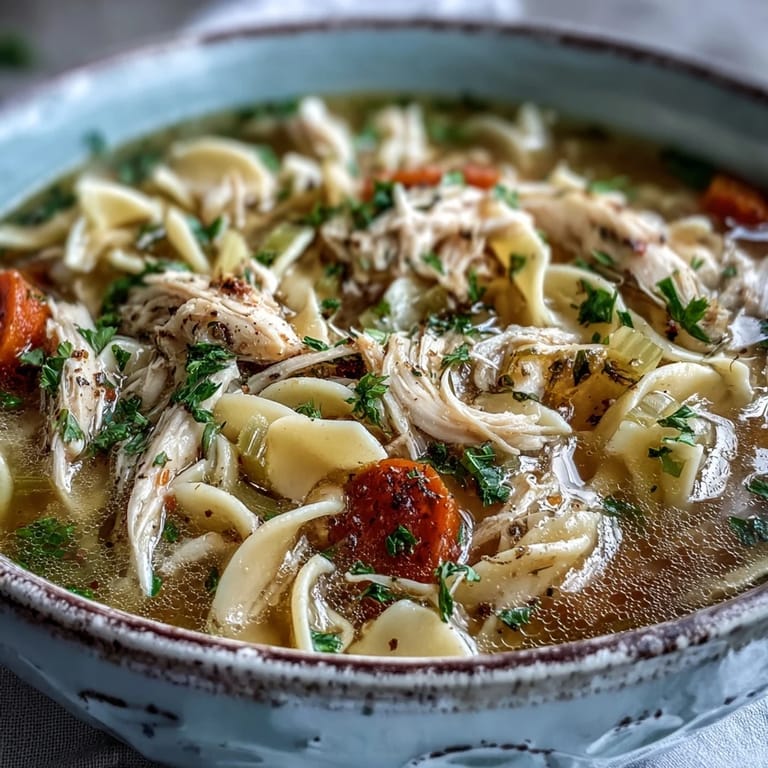
Save My neighbor brought over a pot of chicken and noodle soup on a particularly gray Tuesday, the kind of day where the kitchen felt too quiet and my fridge looked equally uninspired. One spoonful and I understood why people write songs about comfort food—it wasn't fancy or complicated, just honest and warm in a way that made everything feel manageable again. I spent the next week recreating it, tweaking ratios and learning that the secret was patience, not technique. Now whenever someone needs feeding, this is what I make, because it works every single time.
I made this for my kids during their first week back to school, thinking something warm and familiar would help ease the transition. They asked for seconds, then thirds, and suddenly it became the thing they request on difficult days—not because it's trendy or Instagram-worthy, but because it actually works. That's when I knew this recipe belonged in the regular rotation, the kind you make without consulting notes.
Ingredients
- Bone-in, skinless chicken thighs or breasts: Thighs give you richer, more forgiving meat that stays tender even if you lose track of time, while breasts lean toward cleaner flavor—use both if you want the best of both worlds.
- Low-sodium chicken broth: This is your foundation, so pick one you'd actually drink on its own, because its character carries the entire soup.
- Yellow onion, carrots, and celery: This classic trio builds the flavor backbone that makes people think you've been cooking since dawn.
- Garlic, bay leaves, thyme, and rosemary: Fresh or dried herbs matter here more than you'd think—they're what separate this from tasting like hot water with noodles.
- Wide egg noodles: They have enough surface area to catch broth and won't disappear into the liquid like thinner varieties.
- Fresh parsley and lemon juice: These finishing touches wake everything up and keep the soup from tasting one-note.
Tired of Takeout? 🥡
Get 10 meals you can make faster than delivery arrives. Seriously.
One email. No spam. Unsubscribe anytime.
Instructions
- Get the broth going:
- Place your chicken and broth in a large pot and bring it to a gentle boil, skimming off the grayish foam that rises to the surface—this step takes just a few minutes but makes the final soup clearer and more elegant. Don't skip it, even though it feels fussy.
- Build your flavor base:
- Add the onion, carrots, celery, garlic, bay leaves, thyme, rosemary, salt, and pepper, then reduce the heat and cover the pot. The kitchen will smell incredible within minutes as the vegetables soften and release their sweetness into the broth. Let this simmer for 25 to 30 minutes until the chicken is completely cooked through and the vegetables have surrendered.
- Shred and return:
- Pull the chicken out and shred it using two forks—it should fall apart easily if it's ready. Discard the bones and return all that tender meat back to the pot where it belongs.
- Bring everything together:
- Increase the heat to medium-high and bring the soup back to a gentle boil, then scatter in your egg noodles. Stir occasionally so they don't stick to the bottom, and cook for 8 to 10 minutes until they're tender but not mushy.
- Finish with intention:
- Stir in the fresh parsley and a squeeze of lemon juice if you're using it, then taste and adjust the seasoning one more time. Fish out those bay leaves before serving.
 Save
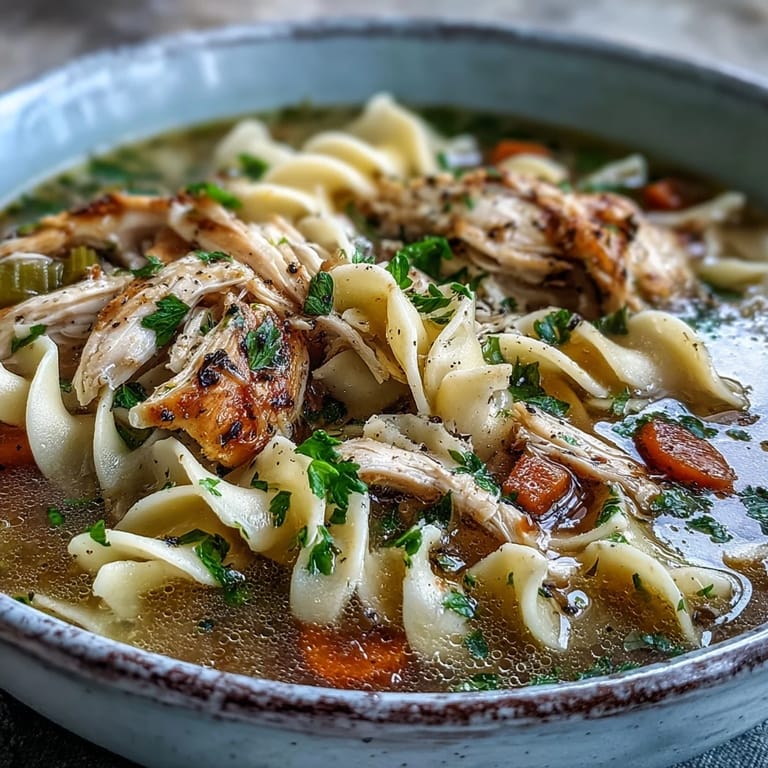
Save There's a moment in every batch when my kitchen shifts from smelling like separate ingredients to smelling like one unified thing—golden, savory, alive. That's when I know the soup is ready, and that's when people usually appear in the kitchen doorway asking when dinner is, drawn by nothing more than a smell.
The Math Behind the Comfort
This recipe works because it respects proportions—enough broth to carry flavor without drowning the other elements, enough noodles to make it feel substantial without making it heavy, and enough vegetables to add texture and nutrition without overshadowing the chicken. It's designed to be approachable rather than fussy, which is precisely why it shows up on your table so reliably. Comfort food doesn't succeed through complexity; it succeeds through knowing exactly what it is and doing that one thing beautifully.
When to Make This
Serve this soup when someone needs gentle food—after illness, on cold days, during transitions, or just because Thursday happened and you want something that tastes like someone cares. It pairs effortlessly with crusty bread for soaking up every last drop of broth, or a simple green salad on the side if you want something lighter. The beauty is that it works whether you're feeding yourself quietly at the kitchen counter or ladling bowls for a hungry table.
Making It Your Own
Once you understand the basic structure, this soup becomes a canvas for your own additions and preferences. Some nights I add a handful of fresh spinach in the last few minutes, other times I stir in a pinch of chili flakes for subtle heat, and occasionally I substitute the egg noodles with a gluten-free alternative without losing any of the magic. The constants—the broth, the chicken, the building blocks of flavor—stay the same, but everything else is negotiable based on what you have and what you're craving.
- Spinach, kale, or other greens can be stirred in at the very end for color and nutrition.
- A splash of white wine or a touch of hot sauce transforms the mood without demanding permission.
- Leftover rotisserie chicken works beautifully if you're short on time and want to skip the simmering entirely.
 Save
Save This soup has become my answer to a dozen different life moments, and I suspect it will become yours too. Make it, share it, and watch how something this simple becomes something people actually remember.
Recipe FAQs
- → Can I use chicken breasts instead of thighs?
Yes, you can use chicken breasts, though thighs provide more flavor and stay tender. For best results, use a combination of both for a richer broth.
- → How do I make this gluten-free?
Simply substitute the egg noodles with gluten-free pasta or rice noodles. Cook according to package directions as cooking times may vary.
- → Can I make this soup ahead of time?
Absolutely. Prepare the soup and store in the refrigerator for up to 3 days. For best texture, cook noodles fresh when reheating, as they can become mushy when stored in broth.
- → What vegetables can I add or substitute?
Feel free to add peas, corn, green beans, or spinach. Parsnips or turnips work well as substitutes for carrots. Add heartier vegetables with the initial simmer and delicate greens at the end.
- → How can I make the broth more flavorful?
Use bone-in chicken for deeper flavor, add a parmesan rind while simmering, or enhance with a splash of white wine. Fresh herbs like dill or tarragon also add wonderful complexity.
- → Can I freeze this soup?
Yes, but freeze the broth and chicken separately from the noodles. Noodles don't freeze well and become mushy. Add freshly cooked noodles when reheating the frozen soup base.